Q&A: Sanity
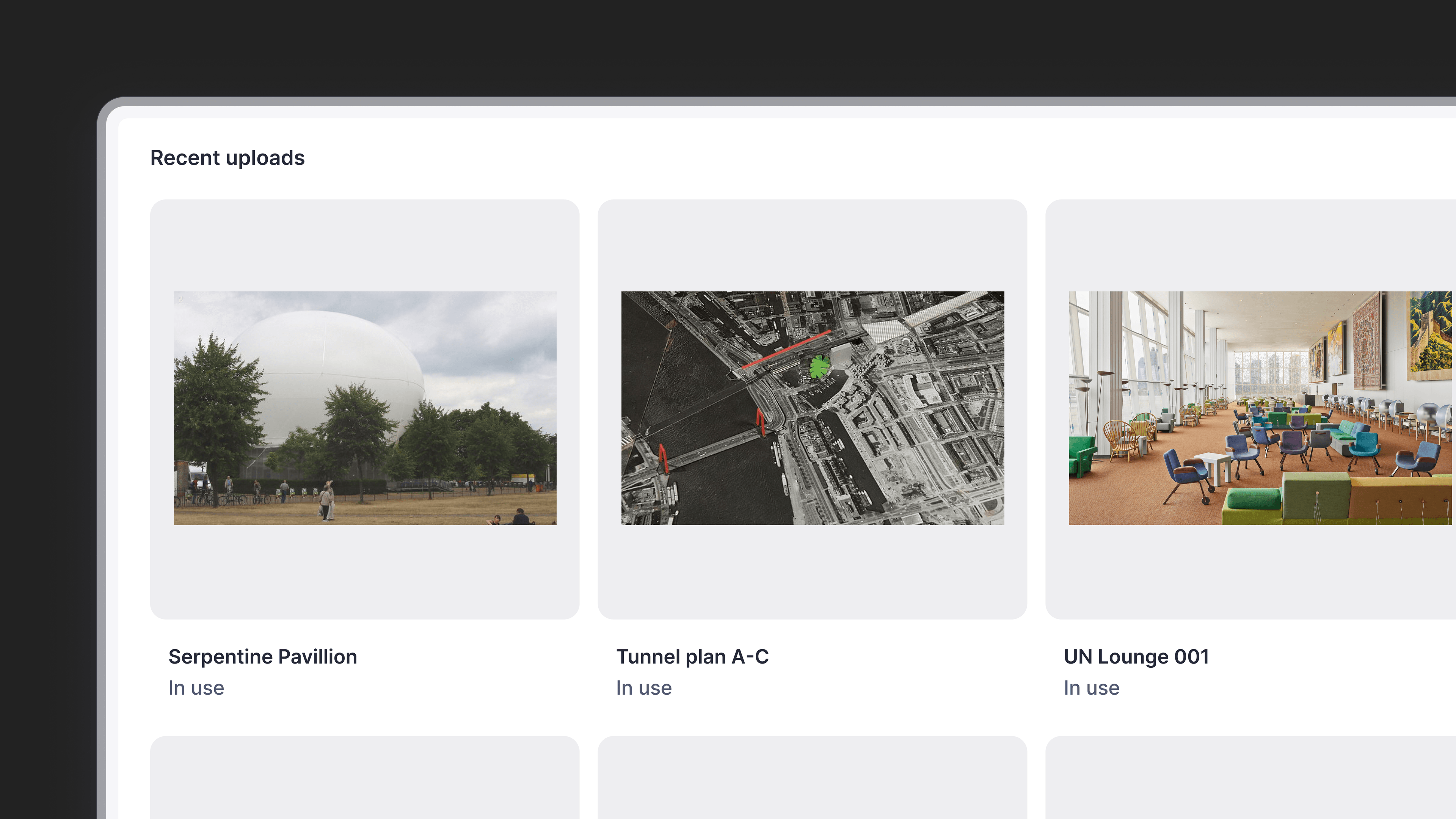
In this Q&A, our product designers share what it was like to join the Sanity product team and design a new media library for Sanity Studio.
Sanity is a programmable platform for structuring and managing content, built to help teams create custom workflows and content-driven experiences. In 2024, BB team members, Almu Casanueva, Anniken Frich and Ianthe Bato integrated with the design team at Sanity to help build a new media library.
Working closely with Sanity’s Head of Product Design, Kristoffer Lundberg, and Product Manager, Ben Getson, the BB team helped conceptualise and design the new media library, defining core concepts, creating flows, and translating them into UI. The media library they helped create is now live.
In this conversation, BB’s creative copywriter Sam Hunt speaks with Almu and Anniken about joining the Sanity product team and building a strong working relationship.
S.H.
When you joined Sanity’s design team, how did you plug into their workflows and integrate the media library into the Studio app?
A.F.
From the start, we worked closely with Kristoffer and Ben to understand Sanity’s vision and figure out how we could best support their refresh of the Studio app. They’d been building on the Studio app for years and were now bringing everything together into one cohesive platform, creating a more seamless experience for managing and producing content. Launching the media library was part of this effort.
We temporarily became part of the product design team—joining design syncs, participating in critiques, and exchanging feedback. This open collaboration enabled us to stay closely involved with the wider Sanity team and keep the overall experience consistent. Regular check-ins with both the design and development team meant the work progressed in parallel, which helped the whole project move forward smoothly.
A.C.
Collaboration with the Sanity team came easily, they were very open to exploring ideas and directions with us. The media library itself was seamless to integrate because it functioned almost as a separate part of the CMS. This meant we could iterate rapidly and test ideas without affecting the main product. With constant sharing of feedback, flows, designs, and updates throughout the week, we were able to keep pace with their vision and make steady progress on the design work.
S.H.
Can you briefly describe the project and the brief that you were given?
A.C.
The brief was to develop an integrated media library within Sanity’s Studio app. When we began, the CMS offered only a few features for asset management, which led many customers to rely on external tools. Our goal was to create a fully functional asset library inside the Studio app, enabling users to organize and manage their assets with the same flexibility and structure they use for their other content within the CMS.
A.F.
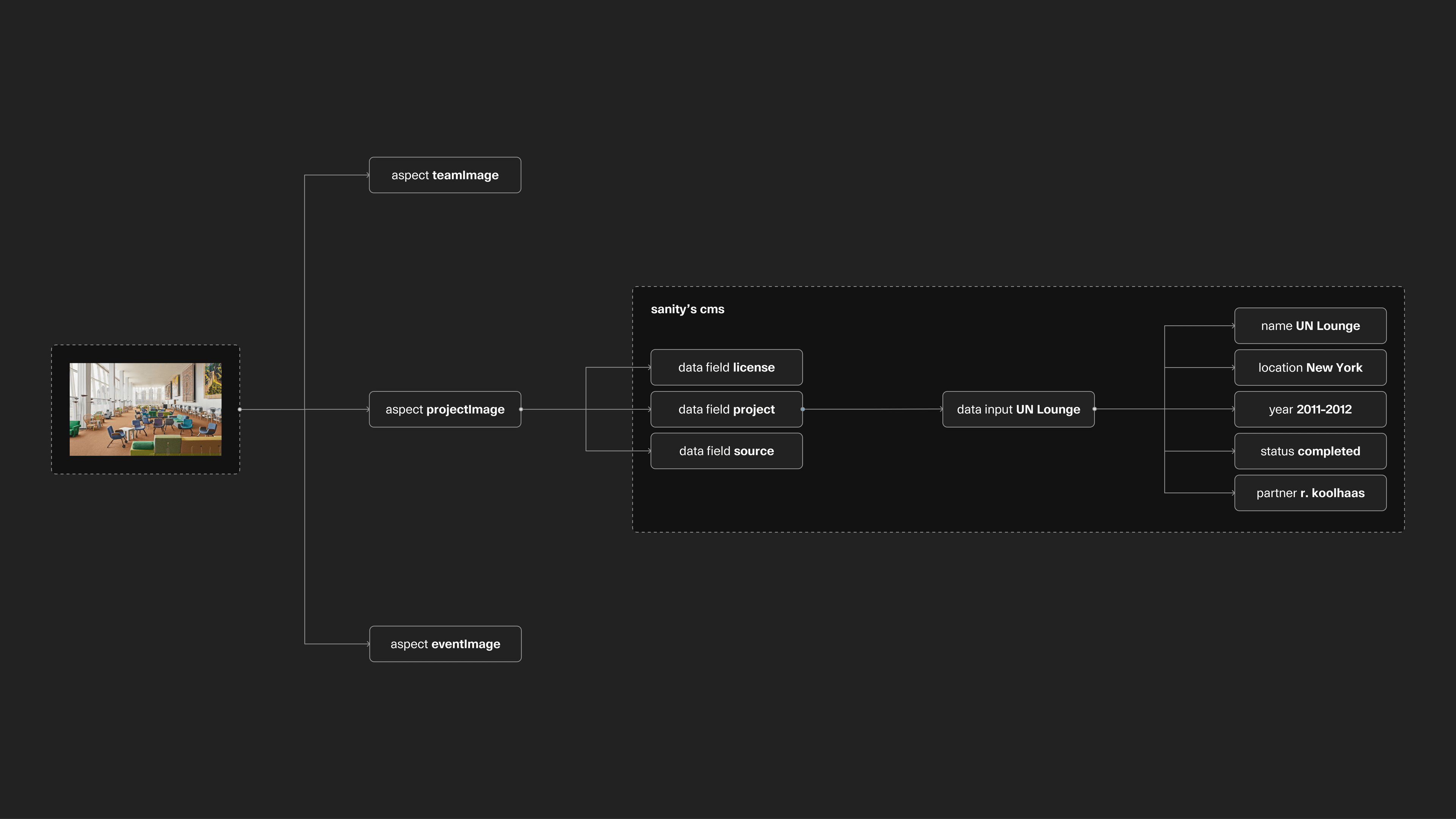
One of the goals was to replace traditional folder hierarchies—which often become disorganised over time—with a media library that turns images, videos, and files into structured content by extending them with custom metadata and references to other content. This approach enables users to access a centralised asset library, automate workflows, and integrate assets seamlessly into their content. It also provides a single source of truth, allowing assets to be referenced across multiple projects, tracked for usage, and updated universally.
S.H.
With the media library being a brand-new feature, how did BB define its concept, align with Sanity’s vision, and roll it out in six months?
A.F.
We were lucky to come in at a stage where Sanity had already done some really valuable groundwork, including user research and interviews with both existing and potential customers. Building on those insights, we helped bring structure and clarity to the product and its core features. In a series of workshops, we mapped out the main functionality and use cases, turning our ideas first into wireframes and later into detailed, developer-ready design flows.
We focused on making the experience intuitive and easy, while also ensuring it could scale. We wanted everything to feel connected and part of the same experience, so we refined the designs to ensure they aligned with existing patterns and visuals across Sanity’s products.
A.C.
As we approached the release date, we began working directly with their development team. That phase was both fun and challenging, with technical constraints and some features that took longer to implement. Our role became key in understanding those limitations and translating them back to the Sanity team through design. We proposed alternative flows that could be built within the current scope and timeline, while still keeping the ideal version in mind for the future.
S.H.
Looking back, what’s one thing that stood out for you? What have you learned, and what did you enjoy most about this project?
A.C.
I learned a lot from working closely with Sanity’s internal developers. At first, those conversations can be tricky because developers are often immersed in technical details, so you have to ask a lot of questions to fully understand their work. But I really enjoyed the process, and it helped me better understand how complex products work and how front-end and back-end decisions affect design.
Another thing I loved was how much freedom we had to explore and suggest new ideas. We weren’t limited by too many restrictions, which made the process exciting. And finally, the Sanity team was great to work with as they were very talented, open, and collaborative. Working with Anniken and Ianthe was also amazing—they’re both highly skilled and great at making complex ideas easy to understand.
A.F.
I also enjoyed the challenge of working on such a complex yet practical tool. I really like design work that takes something that might seem complex and makes it simple and easy to use. It’s always rewarding to see how design decisions can make a difference in how people work and create. I also valued the collaboration throughout the project. Both with the Sanity team and within BB. Working alongside Ianthe and Almu was very enjoyable. They’re both very skilled and inspirational designers. Their support and creativity made the whole process even more enjoyable.
All images used in the product graphics are sourced from Wikimedia Commons and originate from OMA/AMO projects.